
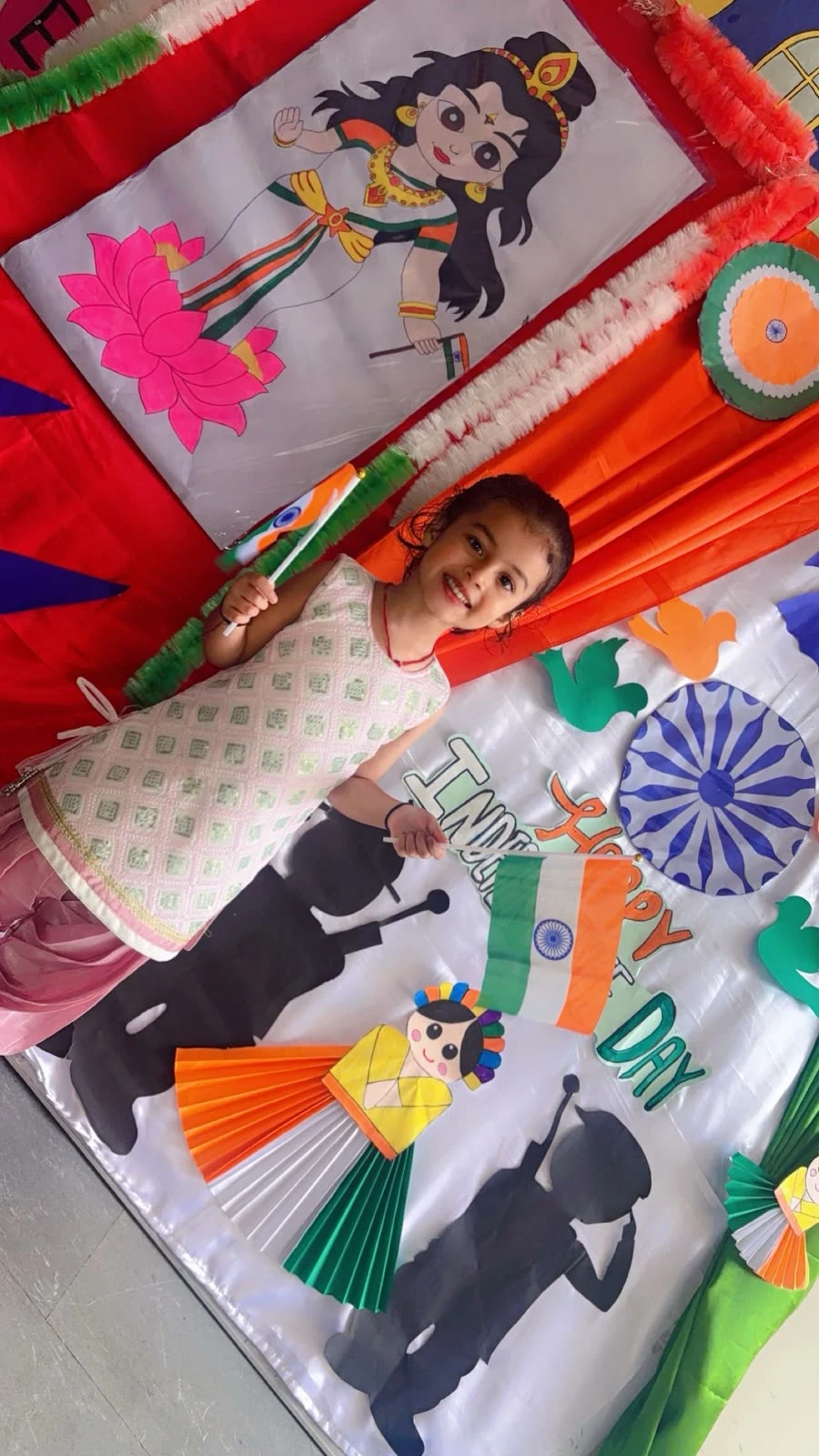
Sanskaar Kids Valley carries the word sanskaar in its name, and it is worth being specific about what that means in practice. The early years are when a child absorbs the habits, courtesies and rituals of their family and community - not by being taught them formally, but by living through them repeatedly and joyfully.
Why celebrations belong in the curriculum
Festivals are, from a child's point of view, extremely good learning material. They have music, colour, food, movement, waiting, anticipation, craft, and other people. A well-run celebration week covers more areas of development than most worksheets ever will.
- Language. New words for objects, actions, food and feelings arrive naturally: rangoli, diya, mistletoe, mehendi, harvest, celebrate, share.
- Sequence and time. "First we clean, then we decorate, then we light the lamps." This is early understanding of order and time.
- Fine motor skills. Making decorations involves cutting, pasting, tearing, threading, rolling dough and pinching.
- Music and rhythm. Songs and rhymes with clapping, moving and drumming build the sound awareness that reading later depends on.
- Gross motor skills. Dancing, moving in a group, and simple performances.
- Social skills. Sharing sweets, waiting for a turn, giving and receiving, saying thank you.
- Identity. A child who has celebrated their own traditions in a group setting learns that their family's way of doing things has a place in the wider world.
- Empathy. Hearing how a classmate celebrates differently is the beginning of understanding that people have different lives, which is the root of both tolerance and curiosity.
The rhythm of a preschool year in India
Across a typical session, a good preschool will mark the year together with families. Most schools build the calendar around: Independence Day and Republic Day, Raksha Bandhan, Janmashtami, Ganesh Chaturthi, Onam, Dussehra, Durga Puja, Karva Chauth, Diwali, Bhai Dooj, Chhath, Guru Nanak Jayanti, Christmas, Lohri, Makar Sankranti and Pongal, Basant Panchami, Holi, Baisakhi, Eid, Bihu, Buddha Purnima, Gandhi Jayanti, Children's Day, and the school's own annual day and sports day.
Not every school can mark every occasion in depth, and no school should try to turn the year into an endless performance schedule. What matters is that the celebrations children do experience are genuine, explained, and enjoyable rather than a rehearsal they are pushed through.
What "values" actually look like at this age
Values are not taught in a lesson. They are caught from repeated small moments:
- Greeting people - saying namaste, looking up, saying bye to the teacher by name.
- Respect for elders - waiting, listening, touching feet or whatever your family does, without being shamed into it.
- Gratitude - thanking the person who served the food, not just the food.
- Sharing - started in the tiffin box, long before it is understood in the abstract.
- Caring for things - putting toys back, watering a plant, not wasting water.
- Looking after someone smaller - helping a younger child open a box.
- Truthfulness - which is built by making it safe to tell the truth, not by punishing the truth.
- Respecting differences - learning that a classmate's festival, language or food is simply different, not odd.
Children copy far more than they obey. If the adults around them greet people warmly and say thank you, the behaviour arrives on its own.
Keeping celebrations inclusive
A preschool class in Delhi is a mix of languages, regions and faiths, and how a school handles that mix tells you a great deal about it. The approach that works:
- Mark many festivals, not just one. A school that celebrates Diwali, Christmas, Eid, Lohri and Pongal sends a clear message to every child that their home has a place here.
- Explain rather than impose. Children should hear the story and the reason - "we light lamps because it is a festival of light" - not be pressed into a religious practice.
- Let families contribute. A parent who comes in to talk about their festival, or sends a dish, does more for the class than a decoration bought in bulk.
- Keep it light on performance pressure. A three-year-old does not need a rehearsed stage show. They need a song, some colour, sweets and a story.
- Never rank children by how well they perform. The annual day is for participation, not for selecting stars.
What parents can do around a festival
- Talk about what is happening, in simple words. "Tomorrow we will make a rangoli. Do you want to help?"
- Send what is asked for, and nothing more elaborate. Schools usually ask for simple clothes or one item. An elaborate costume creates pressure for everyone.
- Keep the food simple and safe. If the class is sharing sweets, small and soft. Remember the choking risks with whole nuts and hard items for children under four.
- Do not over-schedule. Three events in one week is exhausting for a three-year-old. Choose the ones they will actually enjoy.
- Take one photograph, and then put the phone down. Your child will remember you watching, not the video.
Diwali and crackers: the safety part
- Children of this age should be spectators, never handlers. No sparklers in a three-year-old's hand, even briefly.
- Keep a safe distance, and watch for crackers that fizzle and are then approached.
- Dress them in cotton, not synthetic, and keep a bucket of water nearby.
- Protect ears - loud crackers are genuinely distressing for small children, and some will cry. That is not being timid.
- Air quality in Delhi around Diwali is poor. Children with asthma or a cough should stay indoors, and everyone benefits from a limit on how long they are outside.
- Afterwards, wash hands and faces, and give them water. Smoke and dust settle everywhere.
The simplest test of a good celebration
Ask your child about it a week later. If they remember a song, a colour, a taste, a person, or a feeling - it worked. If they remember a costume, a stage and being told to stand still, it did not.
Sanskaar Kids Valley builds festival and event celebrations into the year alongside storytelling, music and movement, art and craft and social learning. If you would like to know how the calendar works and how families take part, call or WhatsApp 9990280330, or look at the activities page and the gallery.