
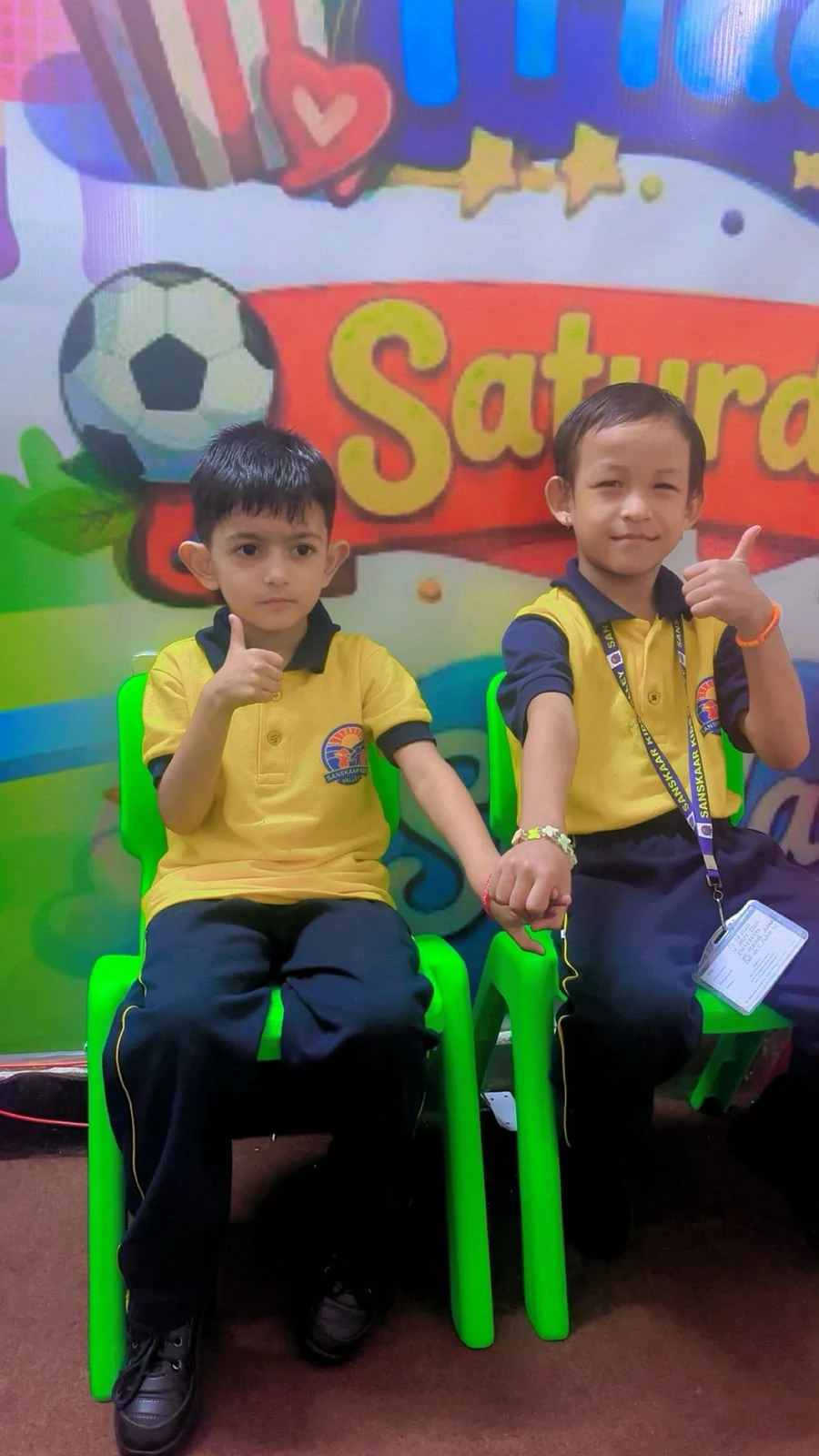
The teacher who spends six hours a day with your three-year-old knows things about your child that you cannot see, and you know things about your child that the teacher cannot see. The most useful thing either of you can do is trade that information regularly, in small amounts, without making it a big occasion.
Why it feels awkward, and why it should not
Most parents hesitate because they do not want to be the parent who takes up the teacher's time, or because they are afraid of hearing something negative. Both are reasonable, and both are reasons to keep the conversation short rather than to skip it. A thirty-second exchange at drop-off, done regularly, is worth more than one long meeting per term.
The five-minute rule
Drop-off and pick-up are the busiest minutes of the day. Twenty children arriving at once means the teacher's attention is genuinely divided. So:
- Drop-off: one sentence, factual. "He slept badly, he may be touchy today." Then leave.
- Pick-up: ask one specific question, listen, and go. If it needs a longer conversation, ask when you can talk properly.
- Anything longer than a minute: message the school or request a call. Do not conduct a serious conversation over a child's head at the gate.
The questions that actually get information
- What is she playing with most at the moment?
- Who does he sit with, and who does he look for when he is upset?
- Does she eat and sleep here? How much?
- What does he do when something is difficult - does he ask, try again, or give up?
- Is there anything I should be doing at home to support what you are working on?
- How long did the crying last after I left?
- What surprised you about her this month?
These work because they ask for observation, not judgement. A teacher can answer "she spends twenty minutes at the sand tray and is starting to share the spade" immediately. "Is she good?" cannot be answered usefully at all.
The questions that do not help
- "Is my child the best in the class?" The teacher cannot answer this honestly and should not.
- "Is he a problem?" Framed this way, the answer is defensive by default.
- "Why has she not learned to write yet?" At three, the answer is that writing is not the task. See Why Play Matters More Than Workbooks.
- Comparing with a cousin or a neighbour's child. It tells the teacher nothing about your child.
- "Has anyone hit him?" asked every day at pickup. It teaches your child to look for grievances.
How to raise a concern without it becoming a complaint
When something worries you - a scratch, a change in behaviour, a comment your child made - the conversation goes much better in three parts:
- What I am seeing: "For the last four days he has said he does not want to come to school, which is new."
- What I need: "I would like to understand what is happening in his day."
- What do you think: "Have you noticed anything different?"
This invites the teacher to be a partner rather than a defendant. It also means the teacher can tell you the truth, including "we have noticed the same thing", which is what you actually want.
What to avoid: arriving at 9 am with twenty parents behind you, raising it in front of your child, opening with "the school never tells us anything", or going straight to a senior person before the teacher has heard it. Escalation is entirely appropriate - but it works far better as a second step, and it works best in writing with specific dates.
How to use a 15-minute PTM properly
- Bring two questions and one observation. Not a list of twelve.
- Ask about development, not achievement. "How does she handle it when she cannot do something?" tells you more than a score.
- Ask what to work on at home. You will usually get one specific, useful thing.
- Tell them what you see at home. Sleep, appetite, new fears, a new baby, a change in caregivers - all of it changes behaviour at school.
- Write down the one action agreed. Then check on it at the next meeting rather than starting from scratch.
Five things teachers wish parents knew
- Sleep fixes more than anything else you can do. A well-slept child is a different child in the classroom. See Sleep and School.
- Ten minutes of daily reading at home is visible at school. It is the single most useful thing a parent can do in the preschool years.
- Tell us about changes at home. A new baby, a move, a parent travelling, an illness in the family. Behaviour that looks random usually is not.
- We can tell the difference between a bad day and a pattern. Give us a week before you worry.
- Your child's behaviour at pick-up is not the whole day. Many children dissolve the moment they see a parent, then tell you nothing. Ask us what happened before you build a story around it.
If there is a real problem
For anything involving safety, hitting that is not stopping, or a child who is persistently distressed, do not wait for the next PTM. Put it in writing with dates and what your child said, ask for a response, and if the answer does not resolve it, ask to speak to the coordinator or the principal. A school that welcomes this is a school worth staying in; one that deflects it has told you something important.
Sanskaar Kids Valley keeps communication open through the school office and the planned Parent Portal, where notices, updates and meeting slots are shared. If you want to know how feedback works before you join, just ask - call or WhatsApp 9990280330 or use the Contact page.