
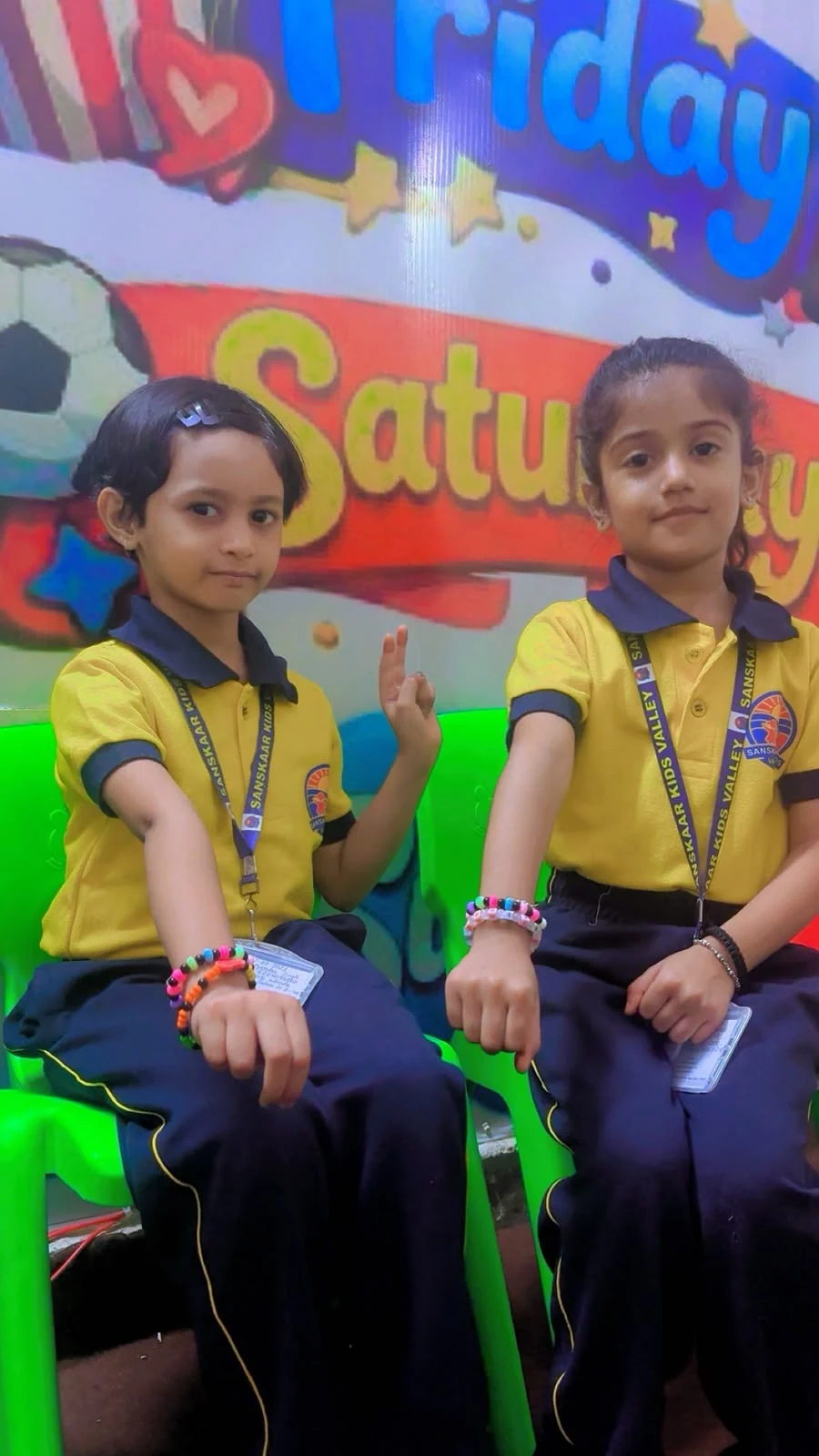
Parents ask this more than any other question, and it is usually asked in a rush during the admission fortnight. Here is the whole ladder laid out, with what genuinely changes at each step. Ages refer to how old your child is as on 31 March of the session year, which is the date Delhi schools use.
The ladder at a glance
- Playgroup / Play School - roughly 2 to 3 years. A settling-in year.
- Nursery (Balvatika 1 / Pre-School 1) - 3+ years, up to 4.
- KG / LKG-Upper KG (Balvatika 2 / Pre-School 2) - 4+ years, up to 5.
- Class 1 - 5+ years, up to 6.
The 3+, 4+ and 5+ bands for entry-level classes are the Delhi government's notified criteria for private unaided recognised schools, so they are the same across the city rather than something each school invents. Playgroup sits below that ladder, which is why its age is set by the school rather than by the notification.
Playgroup: the settling-in year
The purpose of Playgroup is not academics. It is to teach a child that being away from home for a couple of hours is safe and, eventually, fun. Expect songs, stories, free play, a snack, and rather a lot of crying in the first week - from some children, not all. The measurable win at the end of the year is a child who walks in without clinging.
Do not send a child to Playgroup expecting them to return able to write letters. If a school promises that, the school is selling the wrong thing.
Nursery: the three-plus year
Nursery is where a group routine becomes real. Children learn to sit together for a story, to wait a turn, to use a toilet independently, to follow a two-step instruction and to ask an adult for help. Language explodes during this year, and most children start recognising their own name and a few familiar symbols.
Nursery is also the first year where the Delhi age band formally applies, which is why the birthday matters so much. If your child has completed three years but not four by 31 March, they belong here.
KG: the four-plus year
KG is a bridge year. It is still play-based - there is no reason for it not to be - but the activities get more deliberate. Letters and their sounds, counting and comparing, drawing with more control, retelling a story in order, and managing a longer day. By the end of KG most children can recognise their name, count confidently to twenty, hold a crayon with a proper grip and play cooperatively in a small group.
Children who did Nursery in 2025-26 move up to KG automatically, so entry-level admission does not apply to them again.
Class 1: the five-plus year
Class 1 is where formal reading and writing properly begin, because most children now have the attention span, the vocabulary and the hand control for it. The Class 1 age band is 5+ up to 6 as on 31 March. Children who are already inside a school's own ladder usually move up without a fresh admission process.
"But my child is advanced for their age"
Almost every parent believes this, and sometimes it is true. But age bands exist for a reason that has nothing to do with intelligence: they are about the oldest and youngest children being close enough in size, stamina and impulse control to share a classroom happily. A bright three-year-old placed with five-year-olds usually struggles socially long before they struggle academically, and the social struggle is the one that lasts.
If your child really is ready for more, the answer is usually depth, not skipping: harder puzzles, longer stories, more questions, more responsibility at home. A good preschool will differentiate activities within the group rather than move the child up.
"My child's birthday falls in February or March"
This is the classic boundary problem. A child born in early March is the youngest in their group; a child born in early April is the oldest of the next group. Neither is a problem in itself, but be aware that the youngest child in any group is, statistically, the one whose attention and hand control look least mature - simply because they are up to eleven months younger than a classmate.
What helps: an extra term of preschool, a gentler settling-in, and realistic expectations in the first two months. What does not help: pushing a boundary child into formal writing early. Read School Readiness: 12 Signs to Look For.
If your child misses the age band
You have three reasonable options, and none of them is a disaster:
- Keep them in the current group another year. For a boundary child this is often the best answer - they enter the next class as one of the older, more confident children.
- Place them in Play School or Day Care for the year so the routine and the social experience continue without any academic pressure.
- Apply in the next cycle with the documents already prepared, so you are first in the queue.
The quick way to decide
Count backwards from 31 March. If your child completed three years before that date but not four, they are a Nursery candidate. Four but not five means KG. Five but not six means Class 1. Under three means Playgroup or Play School, where the school decides what suits the child.
If you are still unsure, ring the school and give them one number: the date of birth. They will answer in ten seconds, and you will not spend the admission season guessing. At Sanskaar Kids Valley that number is 9990280330 - call or WhatsApp, and the team will suggest the right group for your child. You can also start on the Admissions page or look through the programs first.