
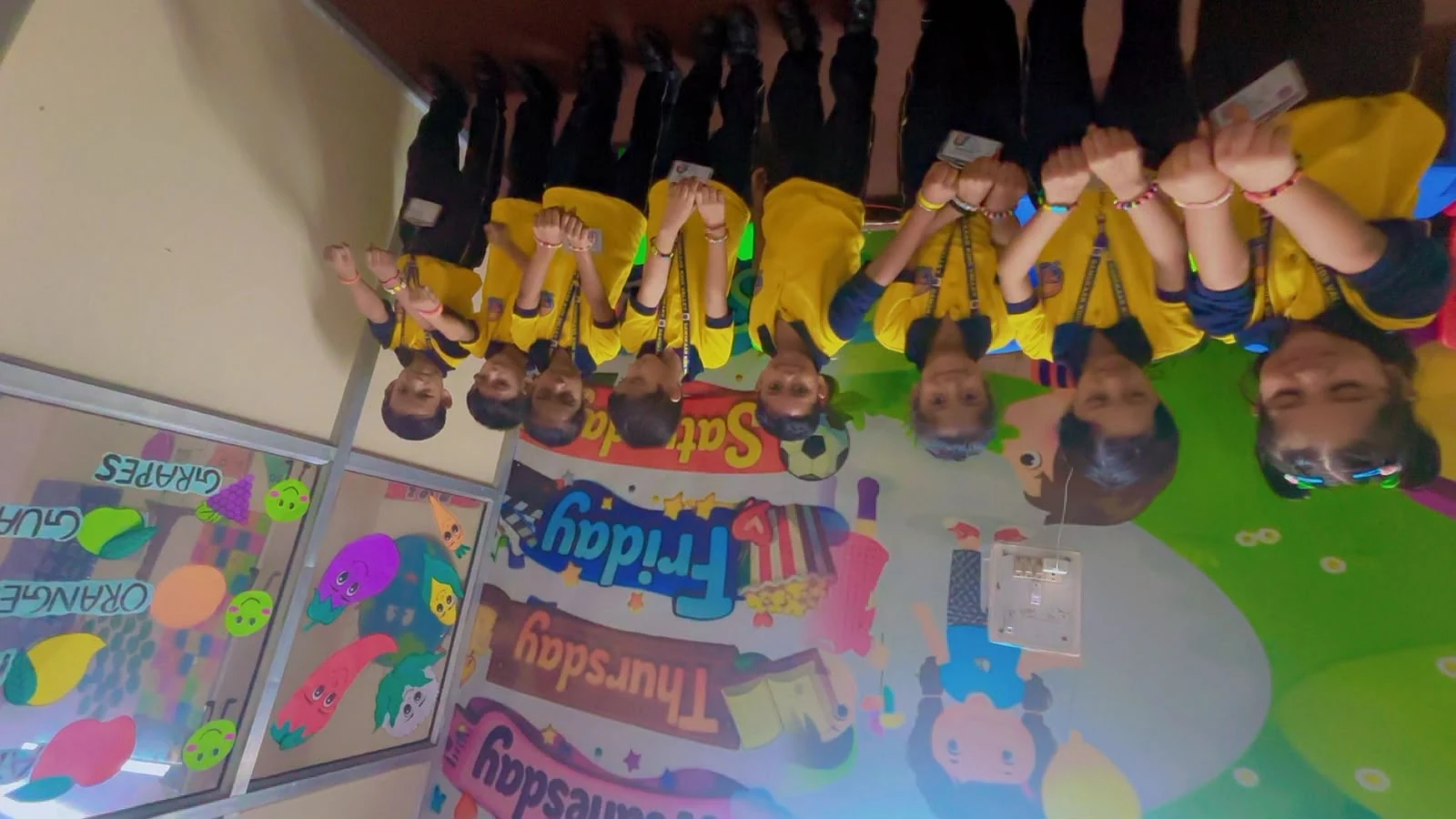
If your child's school has started using words like Balvatika, Foundational Stage or NCF, you are not alone in wondering what changed. Here is the whole policy in plain language, and what it means for the way your child should be learning at three, four and five.
What the Foundational Stage is
The National Education Policy 2020 reorganised school education into four stages: Foundational (ages 3 to 8), Preparatory (8 to 11), Middle (11 to 14) and Secondary (14 to 18). The Foundational Stage is the first one, and it deliberately covers three years of preschool plus the first two years of primary school as a single continuous block.
Those first five years are split into Balvatika 1, 2 and 3, followed by Class 1 and Class 2. The idea is simple and, for most parents, a relief: a three-year-old and a six-year-old are not doing fundamentally different kinds of learning. Both learn by doing, by moving, by talking and by playing. Treating them as one stage means the method does not abruptly change the day a child moves from preschool into "big school".
The 5+3+3+4 structure, in one line
Five years of foundational learning from age three to eight, three years of preparatory schooling, three years of middle school and four years of secondary school. The number parents usually notice first is that the school system now formally begins at three, not at six.
What actually changes in the classroom
- Play is the curriculum, not a break from it. Blocks, sand, water, role play, puppets and games are how early number and language ideas are built.
- No rote writing at age three. Formal handwriting and dictated spelling are pushed later, because pencil control and reading readiness develop at different speeds in different children.
- Language first, and the mother tongue matters. The policy recommends that early learning happen in the child's familiar language, with English added gradually rather than imposed.
- Activity and observation instead of only worksheets. Teachers are meant to observe what a child can do and build the next step from there.
- Progress is reported holistically. Instead of marks, you should expect a description of what your child is learning - language, number sense, motor skills, social behaviour and independence.
- Social-emotional learning is given real weight. Sharing, waiting, naming feelings and handling small disappointments are treated as skills, not as good behaviour that some children simply have.
Why this changed the admission ages
Because the stage now starts at three, entry-level ages across the country were aligned to it. In Delhi, that meant fixing the age bands for Nursery, KG and Class 1 as on 31 March. We explain the exact bands in Delhi Nursery Admission 2026-27, and the class-by-class picture in Which Class at Which Age.
What parents should stop worrying about
The single most common worry we hear from parents of three and four year olds is that "he still cannot write". Under the Foundational Stage approach, that is not a gap - it is age-appropriate. What actually predicts later reading and writing success is much less glamorous:
- Vocabulary. A child who has heard thousands of conversations and stories arrives at school with a bigger bank of words.
- Fine motor strength. Squeezing, pinching, threading and drawing build the hand before it ever holds a pencil properly.
- Attention span. Being able to stay with one activity for ten minutes at age four is a genuine achievement.
- Being able to ask an adult for something. Independence and language together solve most first-term problems.
If you want the practical version of this list, see Fine Motor Skills and Pencil Grip and Why Play Matters More Than Workbooks.
What you can do at home, starting this week
- Read aloud every day. Ten minutes of picture-book reading with questions beats an hour of educational video.
- Count real things. Steps, rotis, spoons, shoes. Number sense comes from objects before it comes from numerals.
- Let them help. Sorting laundry, carrying a plate, watering a plant - all of it is early maths and early responsibility.
- Protect sleep. A tired four-year-old cannot learn, and no enrichment class compensates. See Sleep and School.
- Keep screens for co-viewing, not for babysitting. The research on screen time and language is summarised in Screen Time and Speech Delay.
- Talk about feelings. "You were cross because the tower fell" teaches more than "don't cry". See Social-Emotional Learning at Home.
Four questions to ask your preschool
- Do you plan your activities around the Foundational Stage framework?
- How do you tell me what my child is learning, and how often?
- How much of the day is free play, and how much is teacher-led?
- How do you handle a child who is not yet talking confidently, or not yet toilet trained?
A school that answers these specifically, without jargon, is usually a school that has thought about them.
Where Sanskaar Kids Valley fits
Sanskaar Kids Valley works on a child-first, activity-led approach across Play School, Preschool, Day Care and Early Learning - storytelling, early maths, art and craft, music and movement, sensory play and social learning. That is the Foundational Stage idea in daily practice rather than on paper. Browse the programs, look at the learning approach, or start an enquiry on Admissions. You can also call and WhatsApp 9990280330 and ask which group suits your child's age.